
Taming Dynamic Range — 7 Becomes 1

I was finishing up a day of photography at the 309th Aerospace Maintenance and Regeneration Group, on Davis-Monthan AFB, when I happened upon the Boeing 747 that housed the airborne laser (ABL). The sun was setting in a boldly colored sky behind the massive aircraft and I saw an opportunity to create an equally bold portrait showing not just the details of the aircraft, but the brilliant clouds and deep azure sky. It was a challenge.
Meeting that challenge required technique both at that moment and when back at the computer.
First, I chose a suitable angle and composed the shot, framing this unique aircraft among the others, careful to show the nose cleanly against the sky. I didn't want it to overlap those other airframes. Then I locked the camera down on a stable tripod and captured seven images of the aircraft without moving the camera. Click click click click click click click. The seven images differed only in the length of time that light was allowed onto the camera sensor.
I'll further explain the challenge: because clouds reflect most of the light that strikes them, and these clouds were still in the direct sunlight of the sky above us, the brightest parts of the clouds are very, very bright compared to the nearly black tires, reflecting little of the light that strikes them, and they were receiving very little light in the shade of fuselage. The clouds and the tires are orders of magnitude different in brightness and the camera could not capture detail in both with a single exposure. The dynamic range of the scene was too great.
 Seven bad exposures make one great photo.Seven images of the Airborne Laser platform, a converted Boeing 747, taken at different exposure settings, will be combined to create a single image that shows details in the lightest and darkest areas.
By photographing the scene with a series of different exposures, detail could be captured at all brightness levels then, using special software and settings in the computer, I combined the seven different files into one.
As you can see in the strip of images, above, any one of the seven images would have let in the proper amount of light for some areas of the scene, but too much or too little in others (or both too much and too little). What I do in the computer, then, is combine those areas of proper exposure all across the scene, but — and here's the magic part — in such a way as to still retain the overall sense of the scene. The shadow areas appear dark, while the clouds appear bright, all while retaining detail throughout. I was attempting to compress the very high, true, dynamic range into the appearance of natural light levels. I know I succeeded because the Business Affairs Office was thrilled with it, and the image was also chosen to run in the base newspaper.
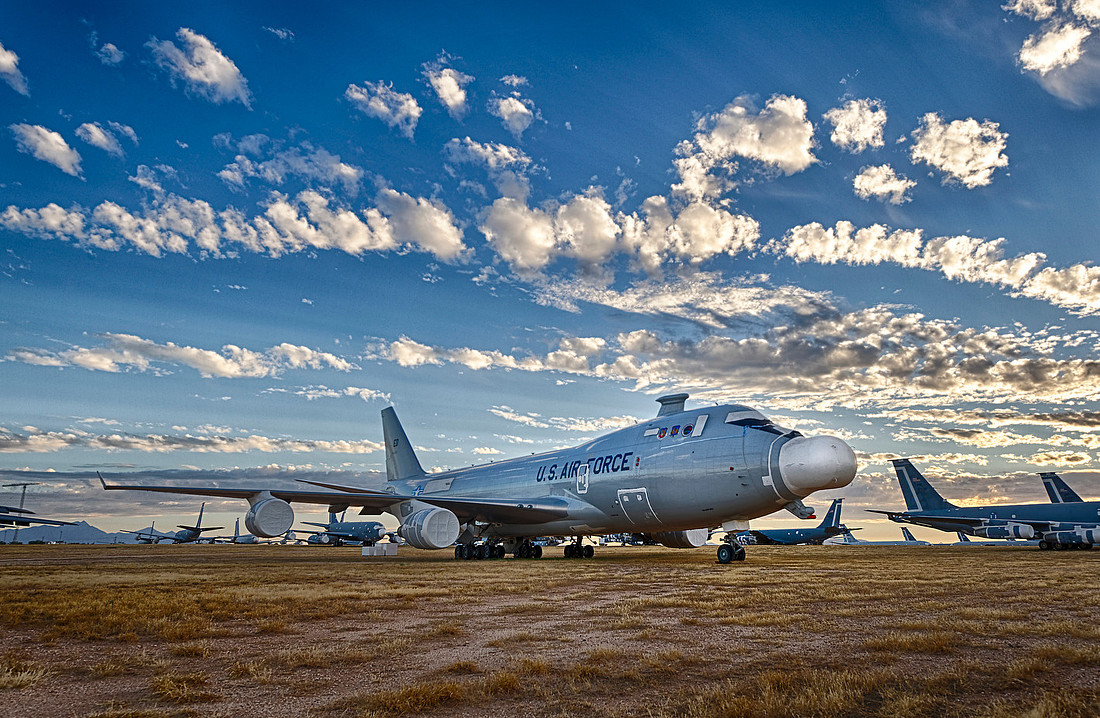
This technique of combining images to compress a range of lighting values that is otherwise to great to represent accurately in a single photo is referred to as high dynamic range, or HDR, photography. But the technique is just a tool — what was important was the vision to see an opportunity and how to make it a reality.
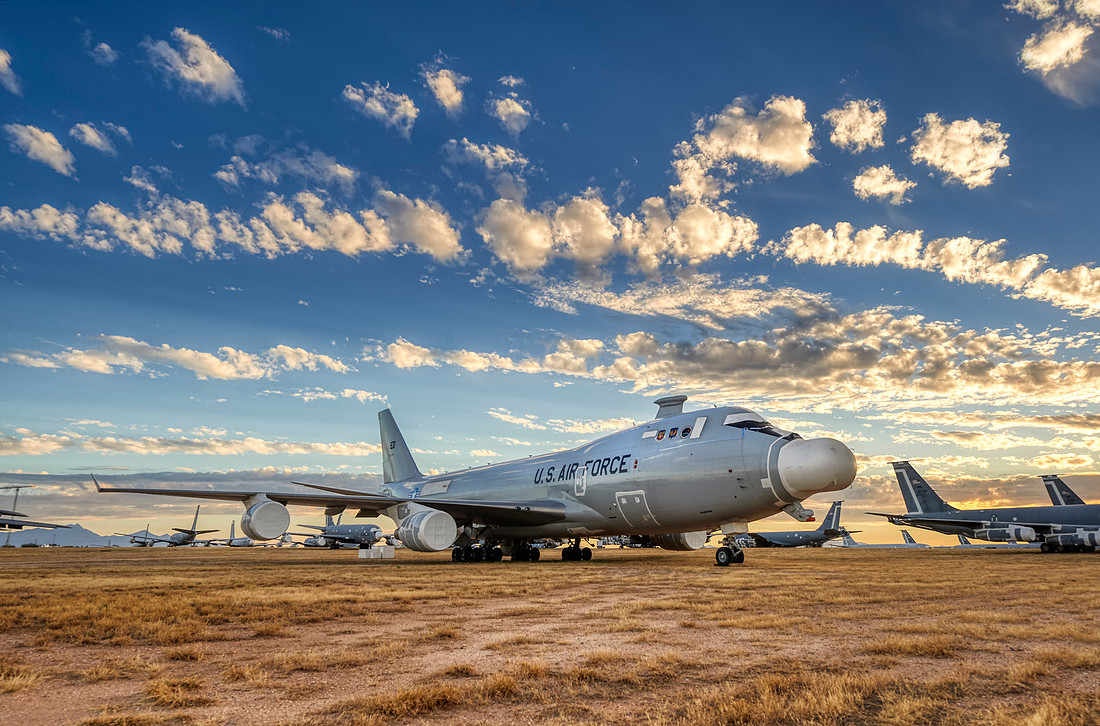
BONUS: I prepared the above HDR in 2012. In 2020 I revisited the original seven images, re-converted them from Nikon's raw format to TIFF and created a new HDR, both converting the raw files and preparing the new HDR with up-to-date software. Here is the result, which might be preferred or not. The point is: HDR images are open to interpretation and to advances in software (and, well, and to changes in tastes).
|
January
February
March
April
May
(2)
June (2)
(2)
July (2)
(1)
August (1)
September
(2)
October (2)
November
(1)
December (1)
|
January
February
(2)
March (2)
April
May
June
July
August
(6)
September (6)
(15)
October (15)
(2)
November (2)
(2)
December (2)
|
(2)
January (2)
(2)
February (2)
(2)
March (2)
(2)
April (2)
(2)
May (2)
(3)
June (3)
(2)
July (2)
(1)
August (1)
September
October
November
December
|
January
February
March
April
May
(2)
June (2)
(2)
July (2)
(1)
August (1)
(1)
September (1)
(2)
October (2)
(2)
November (2)
(2)
December (2)
|
(3)
January (3)
(1)
February (1)
(2)
March (2)
(1)
April (1)
(3)
May (3)
(1)
June (1)
(1)
July (1)
(2)
August (2)
(1)
September (1)
(1)
October (1)
(2)
November (2)
(2)
December (2)
|
(1)
January (1)
February
(1)
March (1)
April
(2)
May (2)
(2)
June (2)
(1)
July (1)
(1)
August (1)
(1)
September (1)
(1)
October (1)
(1)
November (1)
(1)
December (1)
|
(1)
January (1)
(1)
February (1)
March
(2)
April (2)
May
(1)
June (1)
(1)
July (1)
August
(1)
September (1)
(1)
October (1)
November
(1)
December (1)
|
January
(1)
February (1)
March
(1)
April (1)
May
(2)
June (2)
July
(1)
August (1)
(2)
September (2)
October
(1)
November (1)
December
|
January
February
March
April
May
June
July
August
September
October
November
December
|
January
February
March
April
May
June
July
August
September
October
November
December
|
January
February
March
April
May
June
July
August
September
October
November
December
|
January
February
March
April
May
June
July
August
September
October
November
December
|